Who We Are

ONE-DC is a non-profit organization consisting of nurse leaders and nurses aspiring to be leaders. This includes nurses from all settings and specialties, who hold positions as nurse executives, administrators, nurse managers, nurse educators, nursing quality managers, nursing staff leaders and researchers from across the District of Columbia. The organization addresses the nursing workforce, administration, education, evidence-based practice, research, health policy, and professional practice issues.

Mission
The mission of ONE-DC is to strengthen and promote nursing leadership and networking, to advance and advocate for the Nursing profession and to drive positive health outcomes for patients, staff, and the community.

Vision
The vision of ONE-DC is to shape the future of nursing and health care for the District of Columbia through innovative leadership, evidence-based practice, and education.

ONE-DC is a non-profit organization consisting of nurse leaders and nurses aspiring to be leaders. This includes nurses from all settings and specialties, who hold positions as nurse executives, administrators, nurse managers, nurse educators, nursing quality managers, nursing staff leaders and researchers from across the District of Columbia. The organization addresses the nursing workforce, nursing wellness and resiliency, administration, education, evidence-based practice, research, health policy, and professional practice issues.


ONE-DC Officers:

Scott Croonquist – President
The George Washington University Hospital

Hazel Darisse – President-Elect
The George Washington University Hospital

Tameika Langston – Treasurer
Sibley Memorial Hospital

Gia Oliveira Silvera – Secretary
Sibley Memorial Hospital

——————————
Jennifer Hirt, MPA
Senior Director, Communications & Member Engagement
District of Columbia Hospital Association
1152 15th Street NW | Suite 900
Washington, DC 20005
202-682-1584 | www.dcha.org
——————————
ONE-DC Membership Form

Join ONE-DC Today
The function of ONE-DC is to promote nursing leadership as an important specialty practice within the discipline of nursing. Nurse leaders support excellence in health care by impacting the quality of patient care in all settings, mentor nurses to implement evidence-based practice, collaborate with academic partners to guide the education and development of nursing practice, promote the cost effective delivery of care, and build a workforce to address the current and future needs of the community.

Complete the membership application to join.


Nurse Resiliency and Value of Stress Reduction

Former ONE-DC President, Denice Boehm, presented at the DCHA’s Patient Safety & Quality Summit. She spoke about nursing resiliency and the value of stress reduction, particularly within the context of the pandemic.


AONL COVID-19 Longitudinal Study

This report and accompanying PowerPoint presentation focuses on the following research goals:

  • Nursing leadership pulse check
  • Identify key challenges
  • Identify changes in leadership perception
  • Leverage nursing leadership advocacy support

The story from July 2020 has changed including the emotional impact, financial challenges, levels of support and points of care.


Meeting Schedule for ONE-DC Members

Save the dates for upcoming member meetings which are the first Tuesday of every other month from 5:30-6:30 pm.

  • March 1 @ 5:30-6:30 pm
  • May 3 @ 5:30-6:30 pm
  • July 5 @ 5:30-6:30 pm
  • September 6 @ 5:30-6:30 pm

Nurses: Get Involved

ONE-DC is a non-profit organization consisting of nurse leaders and nurses aspiring to be leaders. This includes nurses from all settings and specialties, who hold positions as nurse executives, administrators, nurse managers, nurse educators, nursing quality managers, nursing staff leaders and researchers from across the District of Columbia. The organization addresses the nursing workforce, administration, education, evidence-based practice, research, health policy, and professional practice issues.

Mission
The mission of ONE-DC is to strengthen and promote nursing leadership and networking, to advance and advocate for the Nursing profession and to drive positive health outcomes for patients, staff, and the community.

Vision
The vision of ONE-DC is to shape the future of nursing and health care for the District of Columbia through innovative leadership, evidence-based practice, and education.

ONE-DC is a non-profit organization consisting of nurse leaders and nurses aspiring to be leaders. This includes nurses from all settings and specialties, who hold positions as nurse executives, administrators, nurse managers, nurse educators, nursing quality managers, nursing staff leaders and researchers from across the District of Columbia. The organization addresses the nursing workforce, nursing wellness and resiliency, administration, education, evidence-based practice, research, health policy, and professional practice issues.

ONE-DC Officers:

Denise Boehm – President
CNO at Washington DC VA Medical Center

Laura Hendricks-Jackson – Treasurer
CNO at Sibley Memorial Hospital

Hazel Darisse – Secretary
Assistant CNO at George Washington University Hospital

——————————
Jennifer Hirt, MPA
Senior Director, Communications & Member Engagement
District of Columbia Hospital Association
1152 15th Street NW | Suite 900
Washington, DC 20005
202-682-1584 | www.dcha.org
——————————

DC Hospitals Are Removing Barriers to Substance Use Treatment Through Community Collaboration

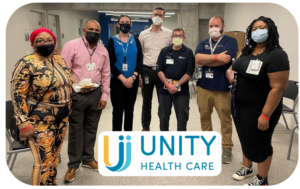
Peer recovery and outreach coaches from five District hospitals gathered for an in-person meeting at Unity Health Care, a community health center, on September 9. The group met to discuss strategies for eliminating barriers and increasing community support for patients entering substance use treatment programs. For the peers, having a strong relationship with community partners is a key component of the referral process, and often determines whether a patient is linked to treatment.

“I loved putting a face to the name of providers we talk to every week,” said Veronica Williams, a hospital-based peer recovery coach from United Medical Center. “The in-person meeting was great because we got to experience the facility first-hand and got to interact with the people who we are sending our patients to, to help them know what to expect when they arrive.”

Community-based coaches also reiterate the importance of community collaboration in supporting patients in finding long-term recovery.  “It was an amazing experience to meet the people at Unity, see their facility and discuss our roles in health care together. It really adds to the sense of community we are trying to establish as peers when we can get together to have a discussion on how to best serve our patient population and community at large!” said Thaddeus Wientzen, an outreach coach from MedStar Georgetown University Hospital.

A patient’s experience at a treatment center has a strong impact on their overall recovery and a negative experience can deter a patient from wanting to enter treatment again. Part of the role of the hospital-based peers is to motivate patients to enter treatment and that includes finding the right treatment provider for each individual. Face-to-face meetings and facility tours help the coaches determine the right place for each patient.

“Visiting Unity Health Care’s East of the River location was very insightful. I personally did not know all the different aspects of the center and learned that there were walk-in hours for MAT patients. I have always had an excellent experience whenever I have used Unity’s services for referrals,” said William Ellis, an outreach coach from Howard University Hospital.

Providing accessible community support is something Unity Health Care does every day by providing a full range of health and human services to meet community needs throughout the District. Nine Unity Health Care sites are fast-track providers for hospital referrals, working with peers to provide same-day or next-day appointments for substance use patients.

Unity Health Care’s Behavioral Health Program Manager Mary Wozniak shared that “meeting with the hospital peers was valuable to understand their perspectives and to reiterate the need for improved access to care with no barriers. When a patient is ready to access treatment, it’s best to connect them immediately, or you risk them returning to drug use. We hope that our open access model will help address some of that need.”

Note: All participants received a COVID-19 screening upon entry and followed CDC guidance on vaccination, mask wearing and social distancing.

L-R: Corrine Simons, William Ellis, Mary Wozniak, Dr. Andrew Robie, Ean Bond, Thaddeus Wientzen, Veronica Williams

#Treatment
#Substance Use Disorder
#DCHA
#Collaboration
#Community
#Hospitals
#Sustainability

© 2026. District of Columbia Hospital Association.