AI Starts With What Leaders Build: Turning Health Care AI Investment Into Value

 

Artificial intelligence is quickly becoming part of the strategic agenda for hospitals and health systems. Yet as organizations evaluate new AI applications, health care leaders face an increasingly important question: What actually determines whether an AI investment delivers meaningful value?

New research from AMN Healthcare and B.E. Smith, AI Starts With What Leaders Build: Turning Healthcare AI Investment Into Value, indicates that AI’s value may depend less on the technology itself than on the organization supporting it.

AMN Healthcare analyzed more than 2,000 hospitals and interviewed 12 senior health care executives to better understand the relationship between digital investment, organizational readiness, and hospital performance. The research examined efficiency and patient experience across a range of technology categories, while executive interviews explored what helps digital transformation succeed inside health care organizations.

The Technology Is Only Part of the Equation

The study found that 30 of 32 statistically significant findings favored greater digital investment. Across hospitals of all sizes, 11 of 12 digital-footprint measures were associated with better patient experience, while nine of 12 were associated with better efficiency.

AI, however, presented a more nuanced picture. While AI was positively associated with patient experience across the full hospital sample, that relationship did not persist when hospitals were compared within similar size groups, nor was AI associated with efficiency in the study.

That finding reinforces an important distinction for health care leaders: adopting AI and being ready for AI are not necessarily the same thing.

The executive interviews produced an especially striking consensus. All 12 leaders described successful digital transformation as organizational change rather than simply technology deployment. Workflow redesign emerged as the strongest operational theme, followed closely by leadership sponsorship and governance.

Readiness Starts With Leadership

Successful AI programs depend on several organizational disciplines working together. Leaders must identify the clinical or operational problem worth solving, determine how technology fits into existing workflows, engage clinicians early enough to shape implementation, and establish clear accountability that continues beyond launch.

The research translates these findings into an eight-point workforce model centered on:

  • Leadership readiness
  • Workforce analytics and governance
  • Workflow integration
  • Workforce design
  • Workforce adaptability
  • Workforce digital capability
  • Upskilling and skill renewal
  • Resilience and continuous learning

Together, these capabilities give health care leaders a framework for looking beyond technology procurement and examining whether their organizations have the leadership, workforce, and operational foundation needed to translate digital investment into meaningful results.

Three Decisions Before the Next AI Investment

Fund the foundation first. Enterprise systems, including EHR, ERP, and revenue-cycle platforms, produced some of the study’s most consistent performance associations. Before pursuing another AI pilot, leaders should consider whether foundational technology and operational work still requires attention.

Redesign before deploying. Technology alone does not change how care is delivered. Workflow integration was the strongest operational theme in the executive interviews, reinforcing the importance of bringing clinicians into the process early and designing technology around the realities of their work.

Govern as though organizational capacity is finite. Hospitals must consider how many initiatives their clinicians, leaders, and teams can realistically absorb. Effective governance means sequencing priorities, establishing ownership, and starting with a clearly defined clinical or operational problem before investing in a new AI use case.

A Leadership Issue, Not Just a Technology Issue

For hospital executives, the larger takeaway is straightforward: AI readiness belongs on the leadership agenda.

Governance, workflow design, workforce readiness, clinician engagement, and leadership accountability are organizational capabilities that health systems can begin strengthening now. They do not require waiting for the next generation of AI technology.

As hospitals and health systems continue exploring AI, the organizations positioned to create sustainable value may not simply be those investing in the most advanced technology. They may be those that have built the leadership, workforce, and operational foundation necessary to put that technology to work.

To learn more about the research in AI Starts With What Leaders Build or discuss how your organization can strengthen its readiness for AI and digital transformation, contact Claire Allison Vice President, Business Development with AMN Healthcare and B.E. Smith at claire.allison@amnhealthcare.com. Claire can connect DCHA members with resources and expertise to support leadership, workforce, and organizational transformation priorities.
DCHA Announces 2026 Health Care & Innovation Award Winners

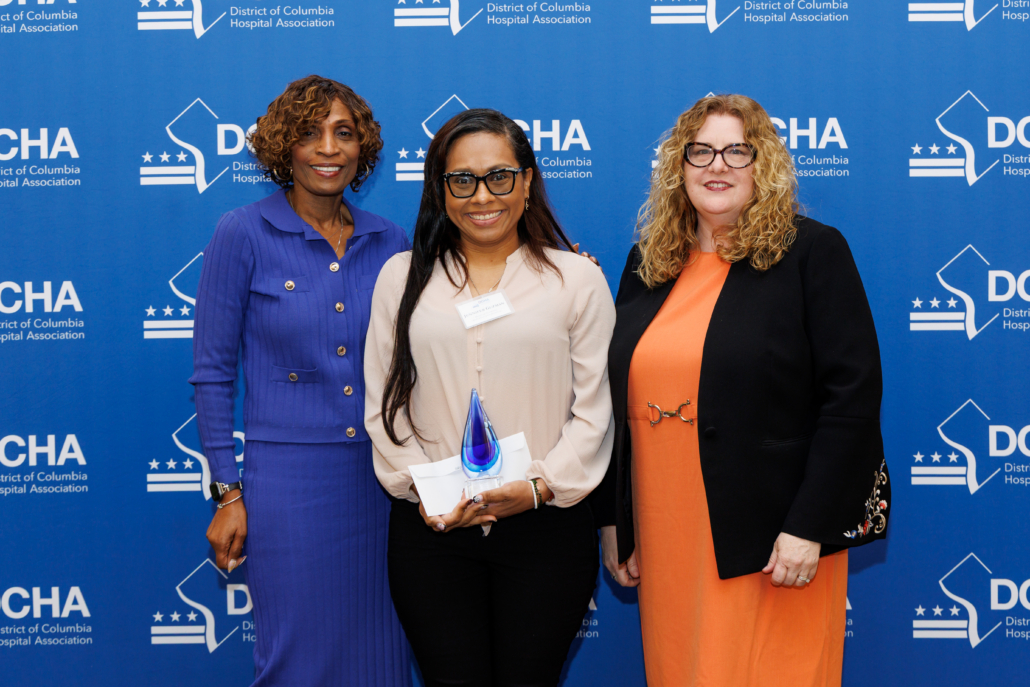
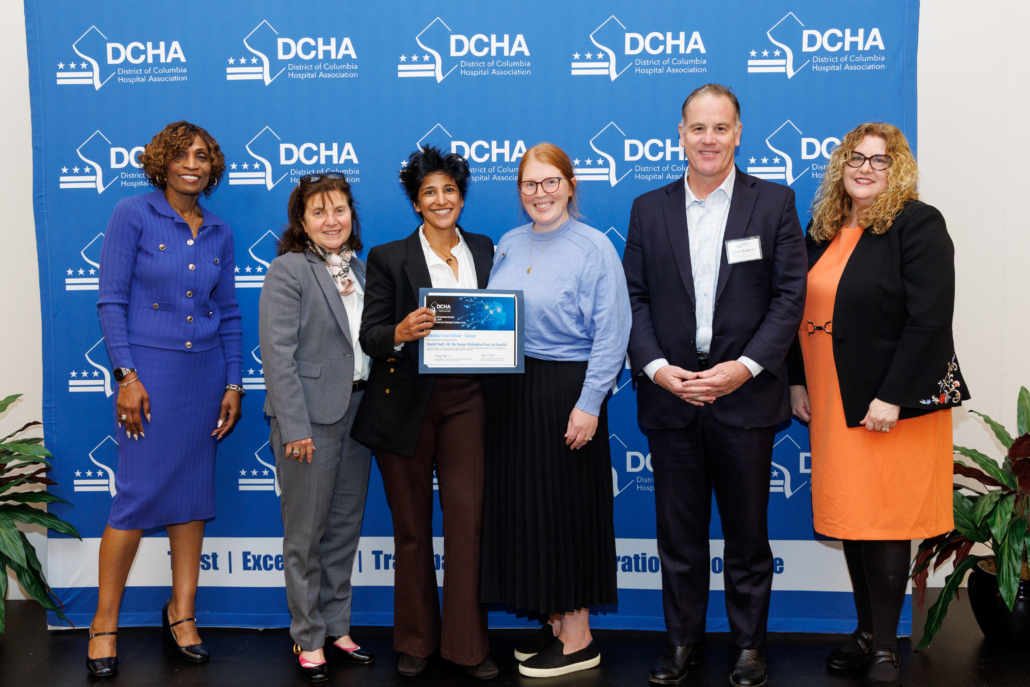
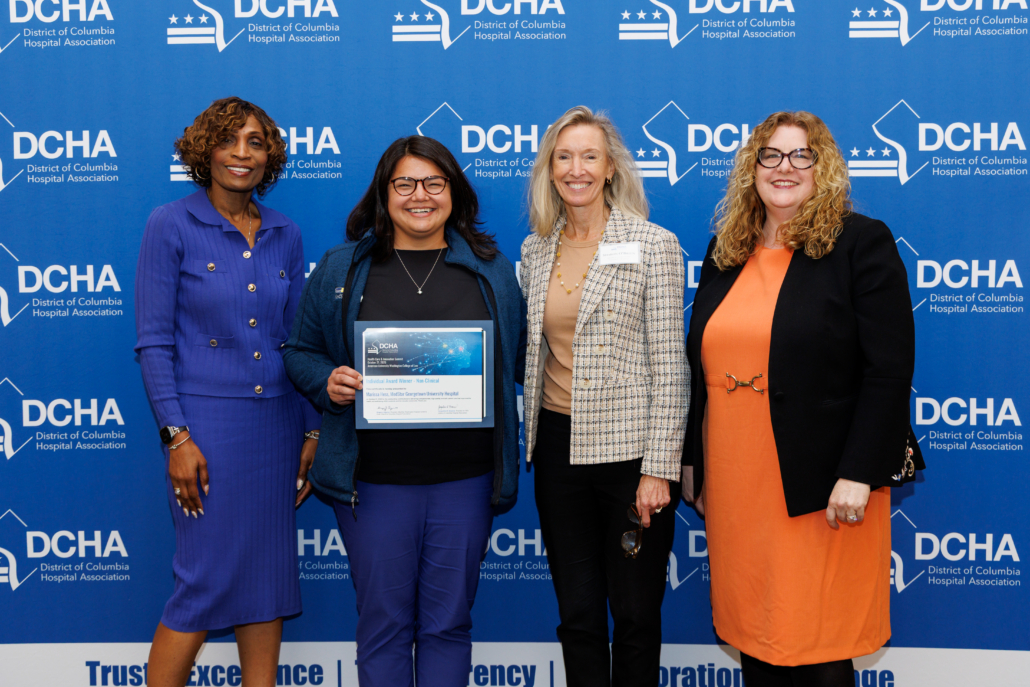
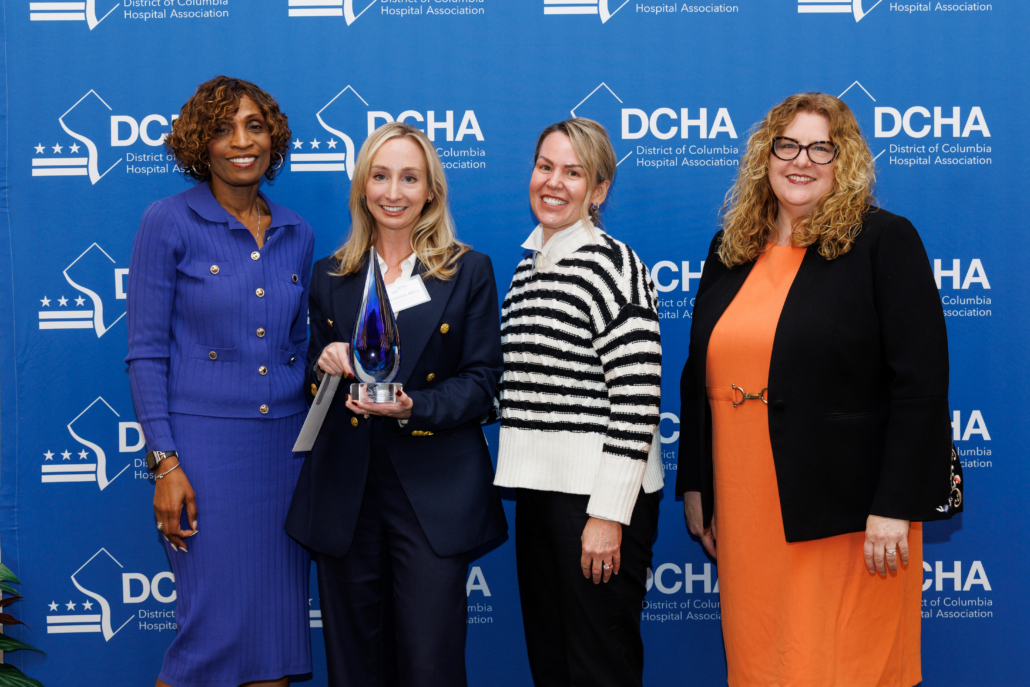
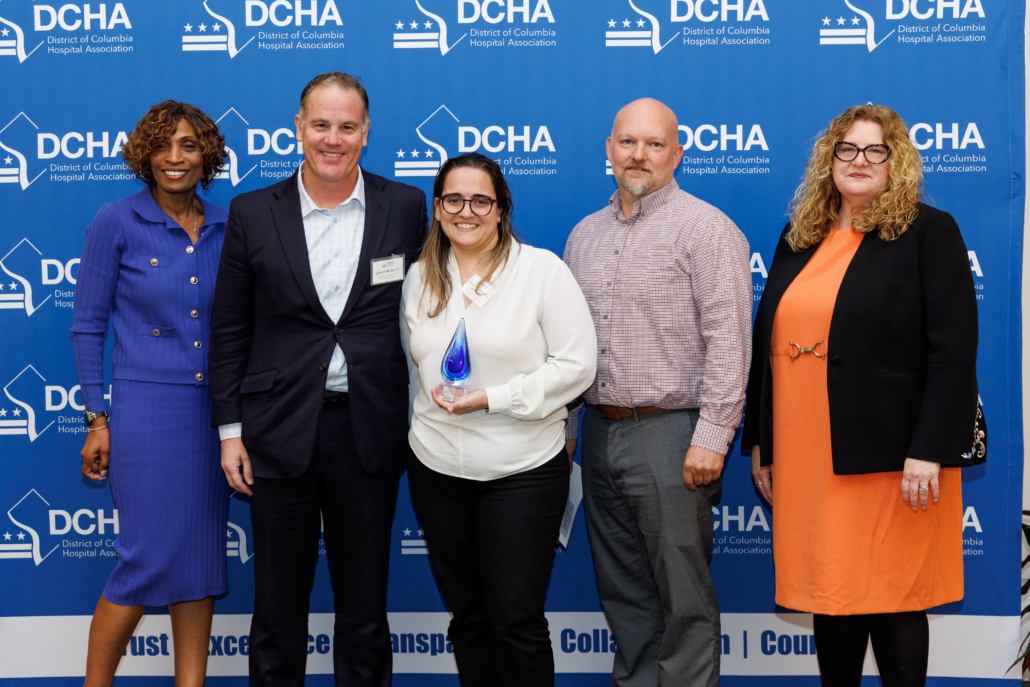
The District of Columbia Hospital Association (DCHA) awarded its 2026 Poster Competition, Individual, and Peer Support awards at its Health Care & Innovation Summit on October 21 at the American University Washington College of Law in D.C. The award winners were chosen by a panel of independent judges from the health care industry or nominated by their peers.  

“Each year we look forward to this opportunity to shine a light on the quality and care you provide for your patients and to the community. Thank you and congratulations to all the winners!” said DCHA President & CEO Jacqueline D. Bowens.   

The Poster Competition award winners are:   

Gold: MedStar Washington Hospital Center, Stephanie Krug & Kristin Flederbach
When Seconds Count, Systems Matter: Standardizing Cardiac Emergency Response in the EP Lab  

MedStar Washington Hospital Center implemented a multidisciplinary initiative to improve emergency response to acute cardiac decompensation in its Electrophysiology Laboratory after Code Yellow Cardiac activations increased 250% in 2023, including one death. The hospital standardized activation criteria, clarified team roles, established a cardiovascular surgeon response-time goal of less than five minutes, and implemented staff education and scheduling changes for high-risk procedures. Following implementation, activations decreased 79%, from 14 to three, with no deaths in 2024. 

Silver: The George Washington University Hospital, Clara Alexandra Rasteiro & Joseph Verde
Improving Spontaneous Awakening and Breathing Trial Compliance in the ICU Ventilator Weaning Protocol 

The George Washington University Hospital implemented a quality improvement initiative to increase the completion and documentation of daily awakening and breathing trials for patients on ventilators. The team introduced staff education, electronic health record updates, standardized rounding tools, and daily monitoring. From January to October 2025, average ventilator days decreased from 5.2 to 2.3, while average length of stay fell from 8.3 to 2.1 days. 

Bronze: MedStar National Rehabilitation Hospital, Sara Gibbs & Jennifer Guzman
Implementing Visual Turn Clocks to Reduce Hospital-Acquired Pressure Injury Rates on a Spinal Cord Injury 

MedStar National Rehabilitation Hospital introduced a visual turn-clock system to help staff reposition patients on a regular schedule and prevent hospital-acquired pressure injuries. Staff education, routine audits and real-time feedback reinforced consistent care. The unit recorded eight consecutive months without a pressure injury, from October 2025 through May 2026, while audits showed 90.5% adherence to the repositioning schedule.

The individual Health Care & Innovation Award winners are: 

Non-Clinical Award: Marissa Hess, MedStar Georgetown University Hospital  

Marissa Hess was recognized for helping develop the MedStar Georgetown Tracheostomy Program. She brought together nurses, respiratory therapists, physicians, and other hospital teams to standardize care through updated policies, clinical practices, and regular audits.  

Clinical Award: Dr. Sheetal Sheth, The George Washington University Hospital 

Dr. Sheetal Sheth was recognized for advancing patient safety and quality of care during periods of staffing changes and operational challenges. Through her commitment to a culture of safety and accountability, she encouraged open communication, continuous learning and staff involvement in improvement efforts.  

Peer Support Award: Bernard (Bernie) Khoury, MedStar Georgetown University Hospital 

Bernard was recognized for his contributions to the Hospital-Based Peer Support Services Program at MedStar Georgetown University Hospital. As the hospital’s sole peer recovery coach, he provides compassionate, individualized support to patients navigating recovery from substance use. Through advocacy, shared lived experience and connections to essential resources, Bernard helped patients build trust, find hope, and access support.


July 2026 Utilization Report

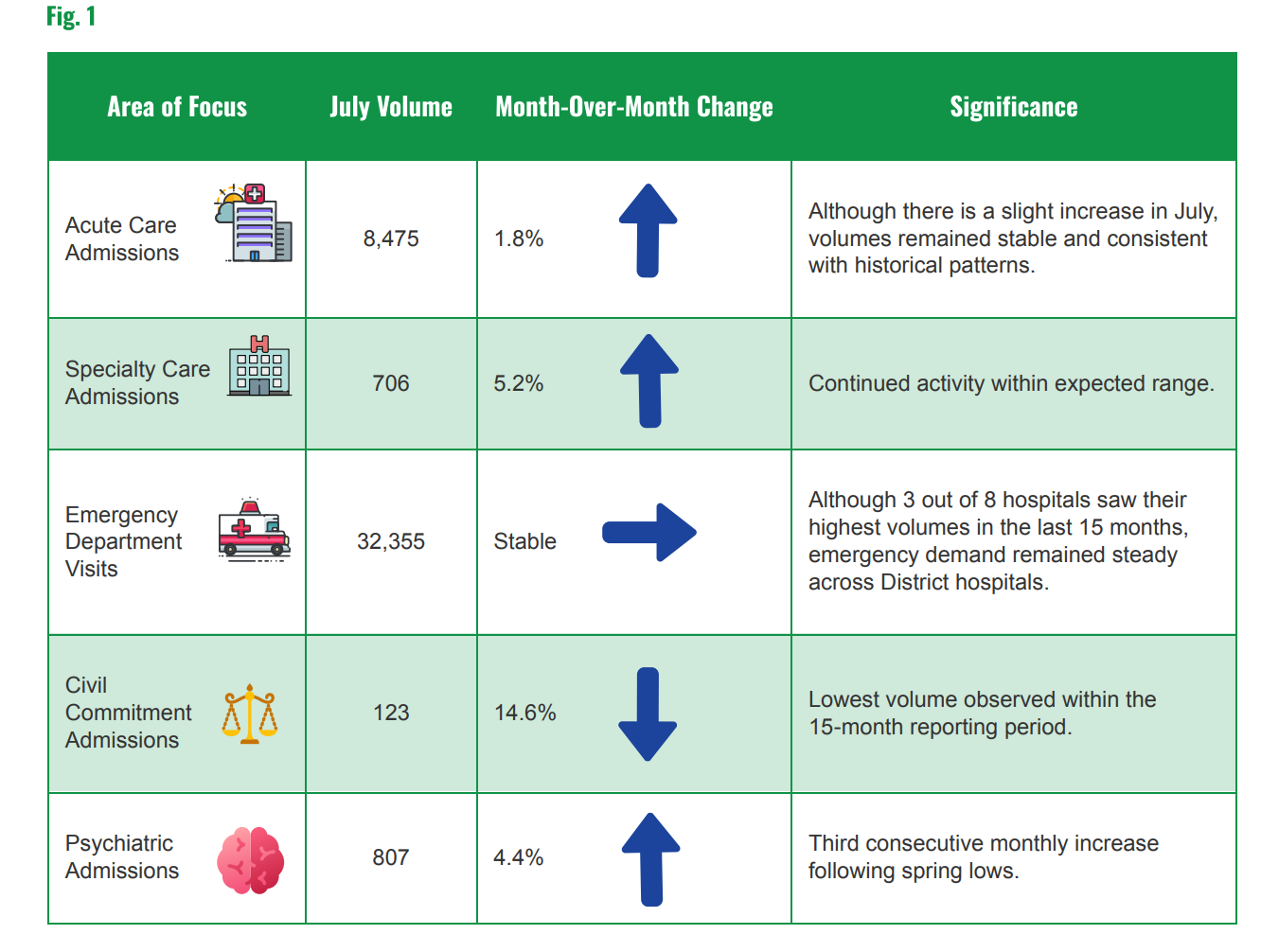
Highlights: District hospitals maintained stable utilization in July 2026. Acute care admissions increased 1.8% month-over-month to 8,475 and emergency department visits remained steady at 32,355. Newborn admissions continued their recovery from lower spring volumes, rising 4.4% month-over-month to 807, while neonatal admissions continue to decline as depicted in Table 14 of the report, and observation admissions remained elevated at 3,112. Behavioral health utilization was mixed, with psychiatric admissions stable and civil commitment admissions declining 14.6% to their lowest level in the past 15 months (see Fig. 1 below).

Download Report

Report Looks at What It Takes To Build The District’s Health Care Workforce

(WASHINGTON, D.C.) – October 1, 2026 — As the nation recognizes Health Care Workforce Development Month, the DCHA Program Services Company, Inc. and the DC Health Care Workforce Partnership is pleased to announce the release of the 2026 Annual Health Care Occupations Report.  

The Partnership’s Annual Health Care Occupations Report serves as the Partnership’s annual assessment of the District’s health care workforce landscape. More than an inventory of occupations or a summary of workforce activities, this report examines the trends shaping health care employment, the occupations driving workforce demand, and the collaborative strategies being implemented to strengthen the health care talent pipeline across the district. 

The Partnership is an industry-driven, community- supported sector-based alliance consisting of education providers and businesses from acute care, ambulatory and behavioral health, and nursing, residential, and long-term care services. “The Partnership is building a talent pipeline specifically for the needs of employers, while the DC Health Care Employment & Apprenticeship Link (DC HEAL) program is guiding students through their journey of employment and education,” said DCHA President & CEO Jacqueline D. Bowens. “None of this progress would be possible without the extraordinary commitment of our health care businesses, public agencies, educational institutions, workforce partners, philanthropic organizations, and community stakeholders.” 

The report examines: 

  • Where the workforce stands today—and where demand is headed through 2030. 
  • The missing link between employment and education and what job readiness looks like today. 
  • What we’re learning from DC HEAL and paid pathways into high-demand health care careers. 
  • The full range of health care careers, from clinical roles to IT, administration, operations and patient support. 
  • How individual workforce initiatives can become a connected system through stronger business, education, government and community partnerships. 
  • Vision 2030 priorities, including AI-enabled care, expanded apprenticeships, and a stronger data-driven workforce ecosystem. After six years of collaboration, the Partnership is moving from individual programs toward a more coordinated workforce system one designed to connect residents to opportunity and employers to talent.
© 2026. District of Columbia Hospital Association.